


Deputy Minister of Science and Technology Le Xuan Dinh welcomed Secretary-General Indra Pradana Singawinata back to Viet Nam on the occasion of the National Productivity and Quality Forum 2026, expressing high appreciation for his presence.
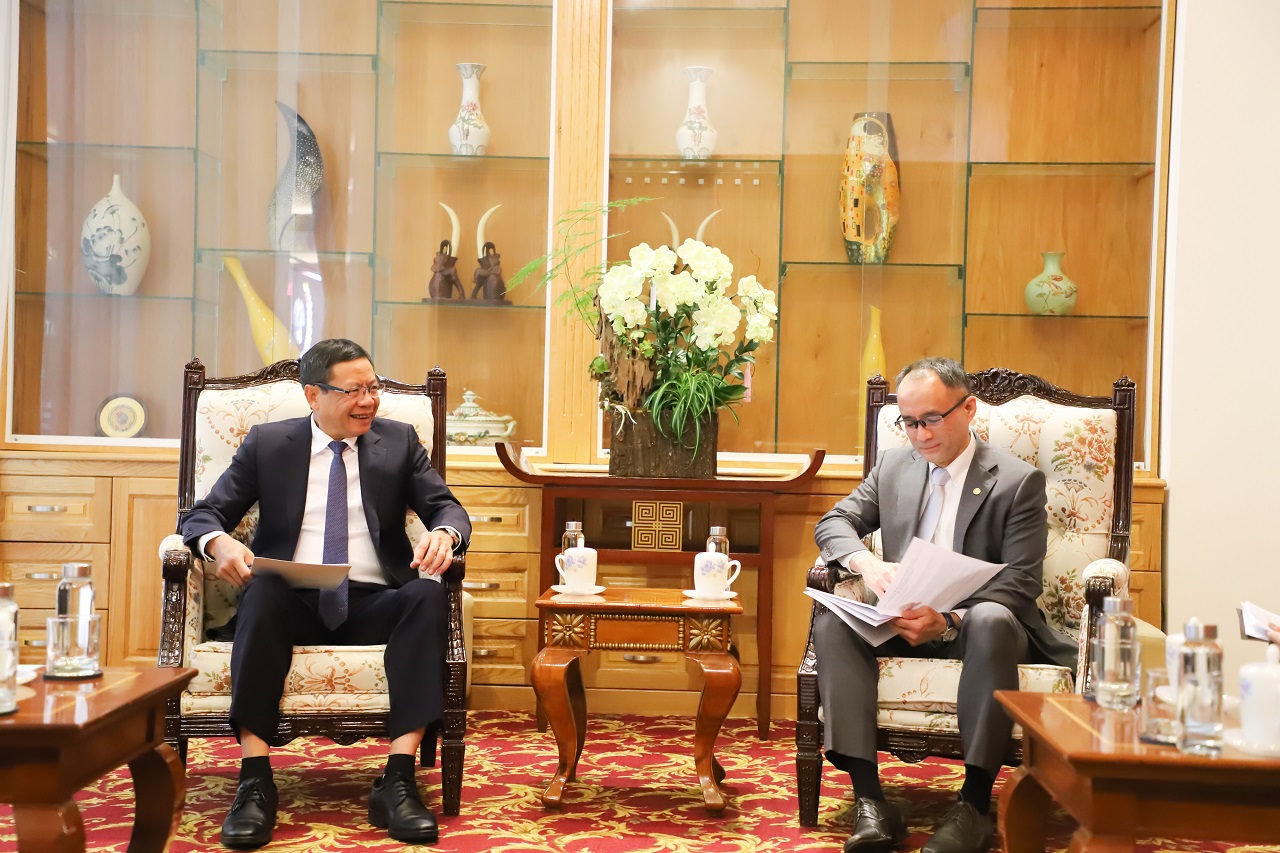
Deputy Minister of Science and Technology Le Xuan Dinh (left) receives H.E. Dr. Indra Pradana Singawinata, APO Secretary-General.
According to the Deputy Minister, the presence of Dr. Indra Pradana Singawinata, APO Secretary-General, is testament to the strong and close relationship between Viet Nam and the APO over the past 30 years, since Viet Nam joined the organization in 1996.
Discussing Viet Nam’s productivity orientations and policies, Deputy Minister Le Xuan Dinh stated that Viet Nam is currently entering a pivotal stage in transforming its growth model.
In the spirit of Central Resolutions, particularly targets for labor productivity breakthroughs, and Prime Ministerial Decisions (such as Decisions No. 36/QD-TTg and Decisions No. 1322/QD-TTg), productivity must be anchored on science, technology, and innovation (STI).
In addition, Viet Nam has set goals to significantly improve its Total Factor Productivity (TFP) index by boosting digital transformation and the application of emerging technologies.
Viet Nam aims not only to enhance productivity at the enterprise level, but also at national, sectoral, and local levels, creating a genuine breakthrough to escape the middle-income trap.
Deputy Minister Le Xuan Dinh also noted that Viet Nam's productivity enhancement agenda aligns with the APO Vision 2030. Viet Nam is shifting strongly from standalone projects toward a more strategic approach through the Strategic Partnership Program (SPP), focusing on tangible outputs and contributions to the national targets of each member economy. Simultaneously, Viet Nam is promoting Green Productivity and AI to boost performance across Vietnamese enterprises.
To achieve these strategic goals, the Deputy Minister proposed that during the 2026–2027 period, the APO focus its support on five key areas:
First, Artificial Intelligence (AI): In the 2026–2027 plan, Viet Nam plans to provide AI training for universities. To achieve an immediate productivity breakthrough, Viet Nam seeks an open discussion on an intensive AI training program tailored for the business sector. These courses should focus not only on theory, but also on practical AI applications to optimize production processes, manage supply chains, and improve product quality.
Second, Digital Transformation: Viet Nam proposed that the APO continue providing technical experts on digital transformation and developing a research framework to evaluate the impact of digital transformation on productivity. Pilot projects could be implemented and subsequently scaled up across Vietnamese businesses.
Third, Green Transformation: Viet Nam requested APO support to build capacity for green transformation among enterprises, as well as training and building a certification system for Green Productivity assessors.
Fourth, Innovation: Viet Nam proposed APO assistance in implementing the ISO 56000 standard on innovation management and building a database indicator framework linking STI with productivity.
Fifth, Viet Nam hopes the APO will continue to partner through the Technical Expert Services (TES) program and connect with Centers of Excellence (COE) to support the country.
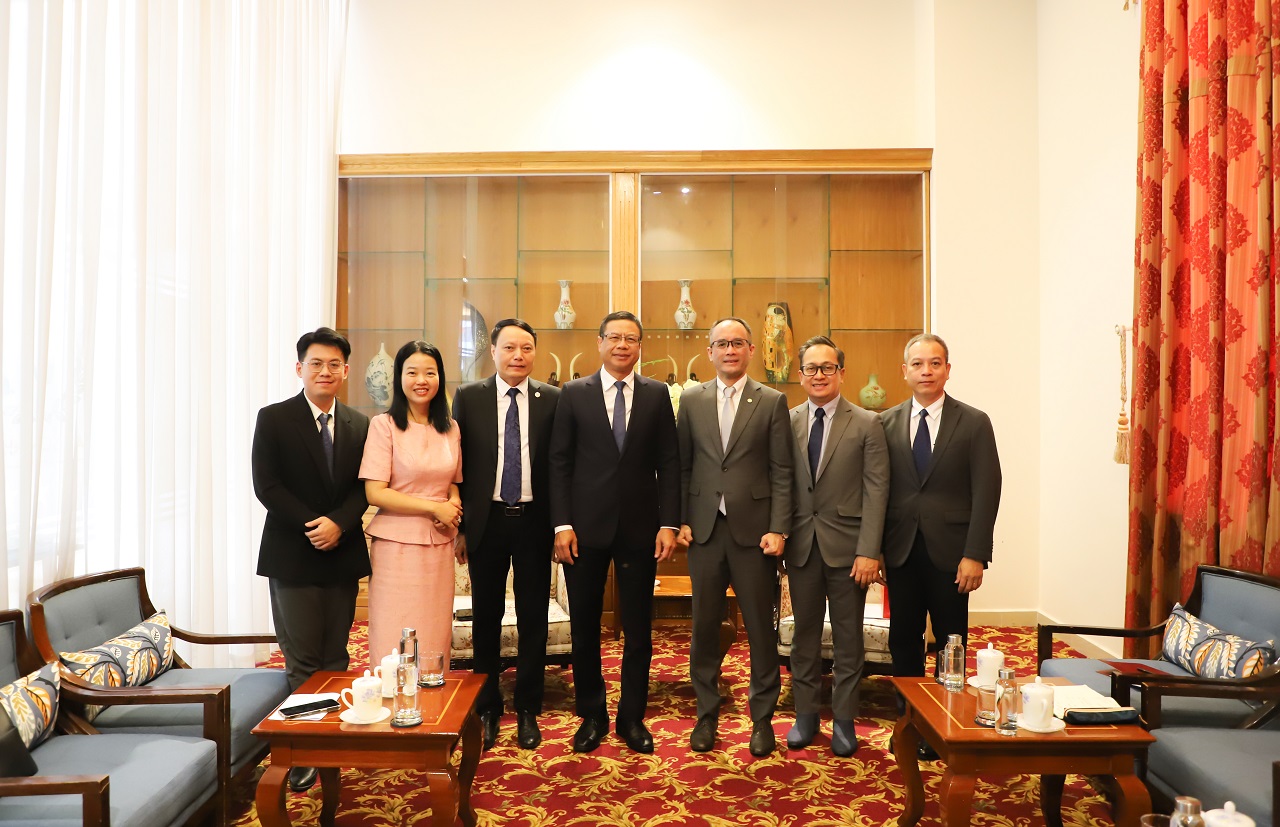
Delegates pose for a commemorative photo.
APO Secretary-General Indra Pradana Singawinata thanked the Ministry of Science and Technology for the warm reception and expressed his honor to return to Viet Nam, particularly for the National Productivity and Quality Forum 2026.
According to Secretary-General Singawinata, the 30-year milestone of Viet Nam’s APO membership signifies not only a journey of enduring partnership, but also a increasingly substantive transformation in bilateral relations - evolving from capacity-building activities to productivity cooperation aligned with Viet Nam’s development priorities.
The Strategic Partnership Program (SPP) marks the next stage of development, featuring closer alignment with Viet Nam’s priorities, enhancing Viet Nam’s proactive role, and establishing a clearer focus on measurable results.
Assessing Viet Nam's five proposed areas, the APO Secretary-General affirmed that they align well with the APO - Viet Nam Strategic Partnership Program framework and the goals of APO Vision 2030.
However, rather than executing five separate projects, Secretary-General Indra Pradana Singawinata proposed adopting a systematic and interconnected approach. "We should connect these five areas into a unified productivity cycle: identifying problems, piloting solutions, measuring results, and scaling up models with proven effectiveness," he shared.
Additionally, Secretary-General Singawinata emphasized three key points:
-Science, technology, and innovation must ultimately be converted into enterprise-level capacity. The practical unit of productivity policy is not technology itself, but the enterprise's entire transformation process: from diagnosis, application, skill development, standards, and workflow redesign to scaling up and innovation. AI or digital tools, if not accompanied by proper managerial capabilities, data, and human resources, may increase investment costs before delivering real productivity gains.
- The diffusion and spreading of technology are as important as innovation among frontrunners. Viet Nam ranked 44th in the Global Innovation Index 2025, where innovation outputs ranked higher than inputs, but human resources and research ranked 70th. This highlights a crucial opportunity to expand absorptive capacity so technology and knowledge can diffuse from pioneering enterprises and institutions to small and medium-sized enterprises, sectors, and local economies.
- National-level indicators such as TFP and labor productivity must be connected directly to sectoral performance, enterprise value-added, and operational metrics like defect rates, cycle times, downtime, delivery efficiency, and resource utilization efficiency.
At the meeting, Deputy Minister Le Xuan Dinh stated that the Ministry of Science and Technology will direct the Commission for Standards, Metrology and Quality of Viet Nam to coordinate closely with the APO Secretariat to operationalize these areas through the implementation of the bilateral Strategic Partnership Program (SPP).
The Deputy Minister also expressed confidence that with the continued partnership of Secretary-General Indra Pradana Singawinata, Viet Nam’s productivity initiatives will undergo comprehensive transformation, keeping pace with global trends in AI, digital transformation, green transition, and innovation./.
