

Viet Nam proposes three pillars of AI cooperation at 2026 China-ASEAN Ministerial Roundtable
<p style="text-align: justify;">Viet Nam has proposed enhancing policy dialogue, safety-testing collaboration, and AI workforce development with China and ASEAN member states, grounded in respect for national sovereignty and domestic law.</p>
The proposal was put forward by Deputy Minister of Science and Technology Hoang Minh at the 2026 China-ASEAN Ministerial Roundtable on Artificial Intelligence, held on September 17, 2026, in Nanning, Guangxi, China.
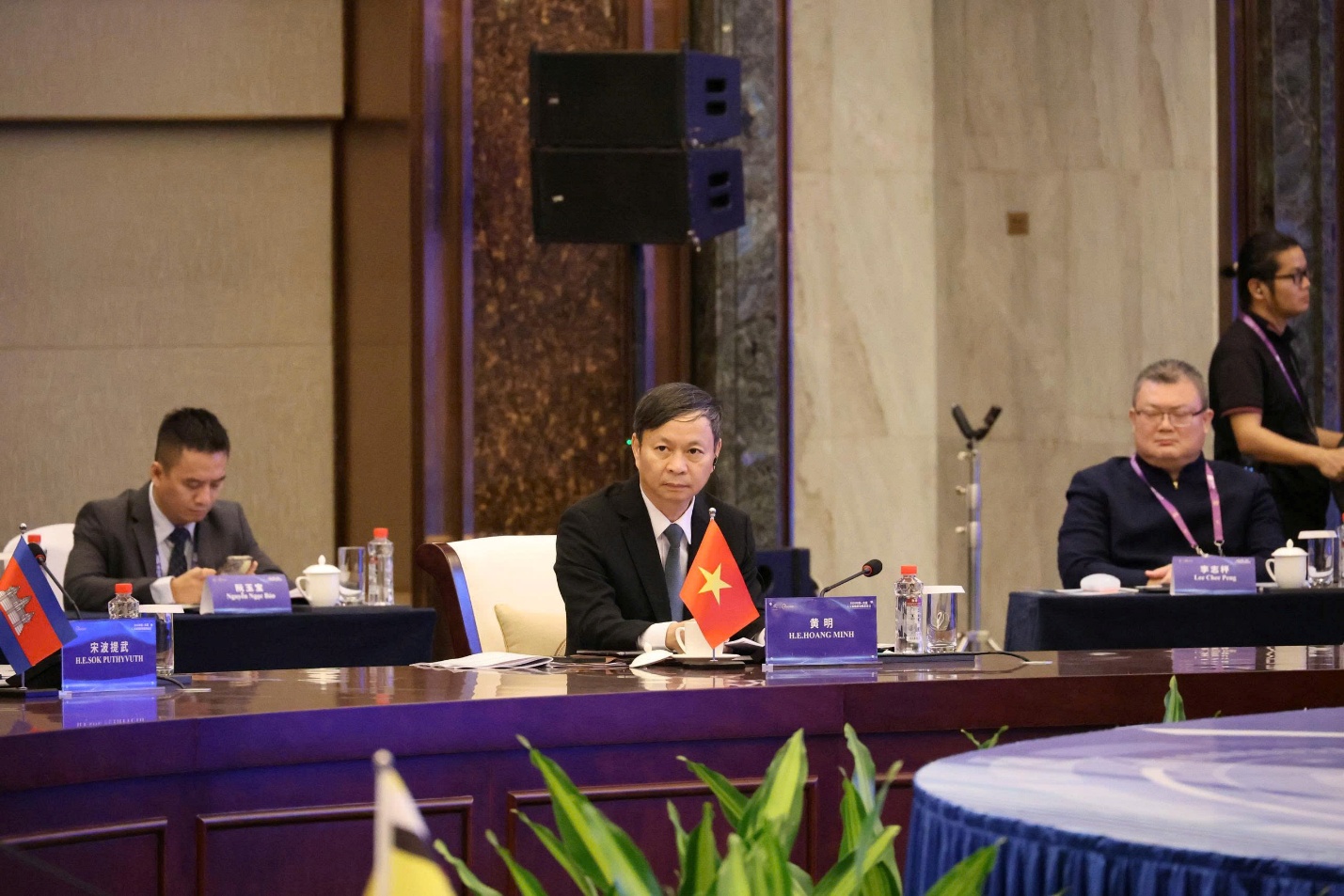
Deputy Minister Hoang Minh attends the 2026 China-ASEAN Ministerial Roundtable on Artificial Intelligence in Guangxi, China.
Under the theme "AI Governance Cooperation: Shaping a Safe Future Together," the roundtable focused on AI governance, safety, and security; socio-economic applications; and regional cooperation in research, innovation, and capacity building.
Delegates exchanged perspectives and practical experiences in AI development, deployment, and governance. Key discussions centered on balancing innovation with risk management, alongside the growing need for deeper cooperation on standards, testing, human resources, and AI capabilities.
Human-centric approach
Speaking at the event, Deputy Minister Hoang Minh emphasized that technological advancement must go hand in hand with human protection and trust-building.
For Viet Nam, effective AI governance serves as the foundation for sustainable innovation, delivering broad benefits to citizens and businesses. Viet Nam maintains a human-centric approach: AI must serve humanity, and its development and application must safeguard human rights and privacy while ensuring fairness, transparency, and accountability.
Viet Nam is advancing AI development alongside safe and responsible governance. Regulatory measures are tailored to risk levels, preserving space for innovation and controlled experimentation.
Deputy Minister Minh noted that China-ASEAN cooperation can leverage each party's strengths to enhance governance capabilities and unlock growth opportunities. He outlined three proposed directions for collaboration, based on equality, mutual benefit, and respect for national sovereignty and laws:
Policy dialogue: Intensify policy exchange and share governance experiences to enhance mutual understanding and alignment among regional regulatory frameworks.
Safety & research: Foster joint research, testing, and safety evaluations while strengthening linkages among institutes, universities, and enterprises. Viet Nam proposed sharing risk-assessment methodologies and technical standards that account for regional languages, cultural nuances, and data sovereignty.
Human capital: Expand manpower training and narrow AI capability gaps through professional exchanges. This includes building capacity for developers, regulators, and end-users, while enabling citizens and small and medium-sized enterprises (SMEs) to adopt AI safely and responsibly.
Concluding his remarks, the Deputy Minister stressed that a safe AI future relies on strong national governance and trust among partners. Viet Nam remains committed to working alongside China and ASEAN nations to foster substantive AI cooperation for the benefit of all citizens and regional prosperity./.